

help identify
Bounty: $12.00
Posted By: HelpIdentify
I'd Like to Know:
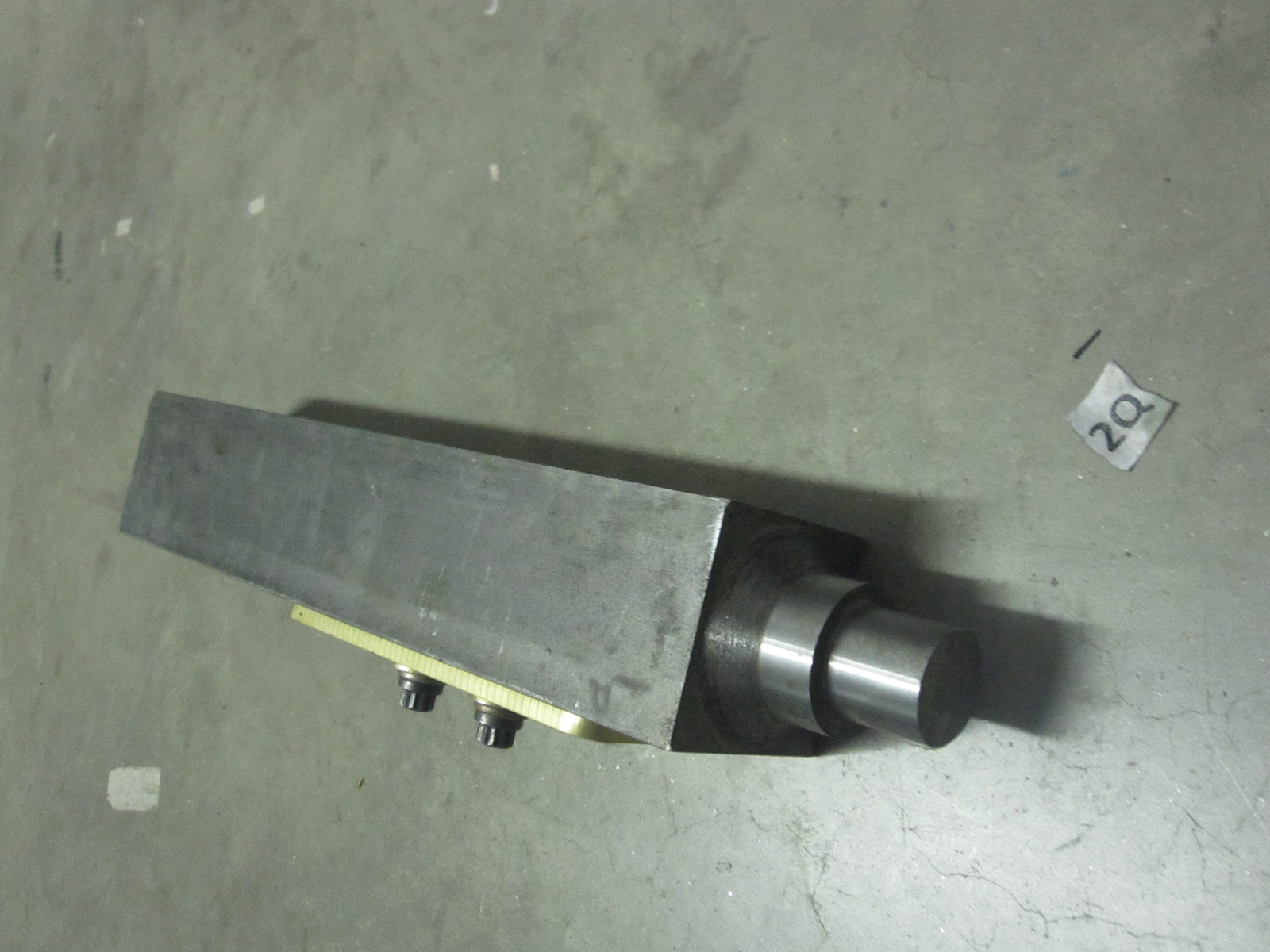
what this is and what is made for,
Opinions
This is a Mitee Bite Products Talongrip Steel which is made for machine operations
References:
By: Xamorejj Submitted on: 02/26/2025 at 07:17AMReason: thank you for the opinion, but the one referenced does not look like then one i have
Thanks — with no markings and dimensions of about 18” × 3” × 3” 📌 What This Likely Is This is not just a random block of steel — it’s almost certainly a custom hydraulic actuator / clamp / press cylinder or a hydraulic manifold block with an integrated piston. Here’s why: ⸻ ✅ Visual & Physical Clues 🔹 Solid rectangular steel body — looks like a structural machine component, not decorative 🔹 Two threaded fittings on one side — typical of hydraulic ports for pressure in/out 🔹 Large cylindrical shaft protruding from end — matches a hydraulic piston rod 🔹 No markings, no brand stamp — suggests it was custom-made or part of a larger machine assembly ⸻ 🧰 What It Was Made For This kind of part is almost always used to push or clamp heavy loads using hydraulic pressure: 🟦 Possible Original Uses ✅ Industrial hydraulic press ram Used to exert controlled linear force in presses or forming machines. ✅ Hydraulic clamping block Used in manufacturing to clamp down parts securely during machining. ✅ Part of a larger industrial fixture Could have been one of several cylinders in a jig or automation system. ⸻ 📌 Why It Doesn’t Appear Like Consumer Gear It’s too heavy and purpose-built to be a tool you’d buy off the shelf — it was probably part of industrial or factory equipment, such as: • CNC machine tooling • Press braking systems • Custom assembly fixtures • Heavy metalworking machinery ⸻ 🧩 How It Works (Likely) 1. Hydraulic fluid enters one port — pushes the piston out 2. Fluid exits the other port — retracts the piston 3. Force is transmitted via the cylindrical rod at the end 4. The rectangular body acts as the structural mounting base Think of it as a very industrial hydraulic cylinder — but unlike standard round-barrel cylinders, it’s mounted within a rectangular block for rigidity in fixtures. But based on what you’ve shown: This is a custom hydraulic actuator/cylinder assembly meant to generate linear force in a machine application. If u want me to walk you through how to figure out whether or not it’s hydraulic then here’s some things you could check to see: How to confirm: ✔ Check the two ports • Are they threaded? • Are they pipe threads (tapered) or straight? • Measure inside diameter. Most common sizes: • 1/4” NPT • 3/8” NPT • 1/2” NPT If they’re NPT, the opening will taper slightly. ⸻ ✔ Try moving the rod Push the rod inward by hand. • If it barely moves or doesn’t move → good sign (hydraulic seal inside) • If it slides freely → seals are likely bad ⸻ 2️⃣ How to Safely Test It ⚠️ IMPORTANT: Do NOT hook this to high pressure without knowing condition. Safe Low-Pressure Test Best way: Option A – Hand Hydraulic Pump (Best Method) Use: • Porta-Power pump • Manual hydraulic test pump • 1,000 PSI or less for first test Hook pump to one port. Leave other port open to bucket. Pump slowly. If rod extends → it works. Then reverse ports to retract. ⸻ Option B – Air Pressure (Low PSI ONLY) ⚠️ DO NOT exceed 50 PSI with air. Air is dangerous because it compresses. Hydraulic oil does not. Hook regulated air compressor: • Start at 10 PSI • Increase slowly If rod moves → internal piston intact. ⸻ 3️⃣ What Fittings It Likely Needs Most industrial blocks like that use: • NPT pipe thread • ORB (O-ring boss) • Possibly JIC hydraulic fittings To determine: • Measure thread diameter • Count threads per inch • Or take to a hydraulic supply shop
References:
By: Copia Submitted on: 02/13/2026 at 09:53AMReason: thank you for the opinion, the side have bolts screwed in, they are not ports